
Cognitive behavioral therapy (CBT) is a form of brief therapy. It involves an average of 20 sessions, at a rate of one session per week or two sessions per month. It is a form of psychotherapy that focuses on the here and now, on the person’s daily life, while also taking into account the reasons for the disorder in the past. The therapist and patient work together to understand how the patient functions, with kindness and empathy.
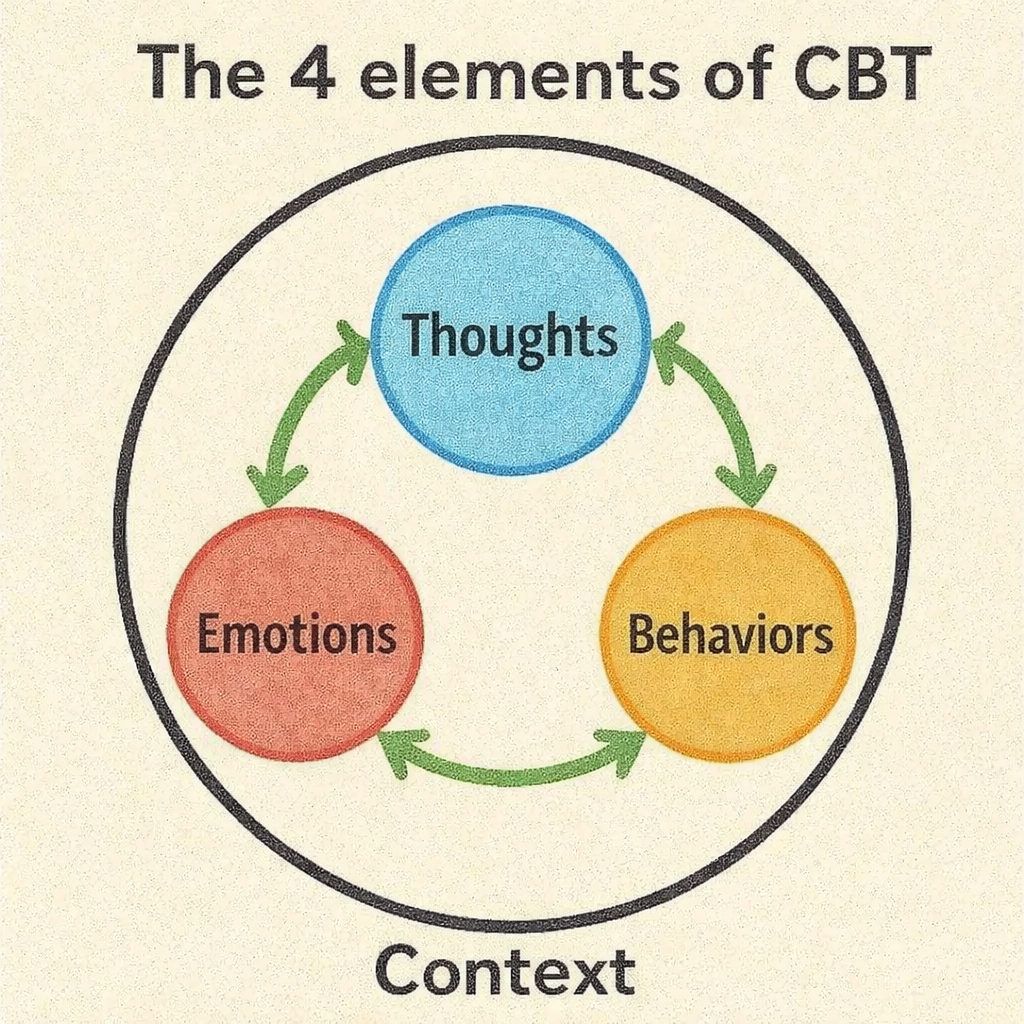
The patient is active during and between sessions, which makes psychotherapy effective. Changes are encouraged in the patient’s life on a behavioral level (learning new behaviors), cognitive level, and emotional level (developing a different relationship with their thoughts and emotions).
There are many reasons why someone might seek counseling and begin CBT : feeling unable to accomplish certain things, feeling trapped in a rut, repeating the same behavioral patterns, loss of meaning and/or zest for life, feeling like a spectator in your own life, etc. Requests vary greatly across all ages. And if you are unsure about your request, we can work together to identify areas to focus on.
Acceptance and Commitment Therapy (ACT)
Acceptance and Commitment Therapy (ACT), developed by American psychologist Steven C. Hayes and his colleagues, belongs to the CBT school of thought. It is one of the newer contextual therapies, also known as third-wave therapies (following the behavioral and cognitive waves).
It aims to improve psychological flexibility by developing the ability to be in touch with one’s emotions and thoughts in the present moment, while maintaining or changing one’s actions as needed in pursuit of one’s values, i.e., what is truly important and meaningful to the individual.
Psychological flexibility allows us, for example, to accept the anxiety that comes with certain actions we want to take, whereas seeking to avoid this emotion can lead to an inability to achieve our long-term goals and thus to a loss of freedom of action. Acceptance is the willingness to experience undesirable private events in order to pursue our values.
In order to develop flexibility, the ACT aims to promote :
- developing skills to cope with unpleasant thoughts and emotions (mindfulness, thought defusion techniques).
- clarifying values and using this knowledge to guide and motivate changes for a richer and more intense life.